

What is a Dolomite Countertop?
What is a dolomite countertop? Dolomite countertops are countertops made from dolomite natural stone, which is cut into slabs and then finished (polished, honed, or textured) for kitchen and bathroom use. Dolomite is popular because many dolomite stones give a marble-like look while being chosen for everyday practicality.
Dolomite is a natural stone (not a man-made surface). That means every slab has its own veining, color variation, and finishing behavior—so choosing the right slab and doing correct care matters.
As an interior designer with 10+ years in kitchen design, bathroom remodeling, and decor projects—and with experience working directly as a contractor—I recommend dolomite when clients want a premium look with realistic day-to-day performance and a clear maintenance plan.

What Is Dolomite Natural Stone?
Dolomite is a natural sedimentary stone that forms when limestone is exposed to magnesium-rich groundwater over millions of years.
Think of it as the “middle ground” between marble and quartzite. It gives you the same luxury, gray-and-white veined look as classic marble, but it is structurally denser, slightly harder, and less prone to scratching or chipping. For homeowners exploring premium natural stone options, this material strikes a fantastic balance.
While it is more durable than marble, it is still a natural, porous stone, meaning it requires regular sealing and can still get dull spots (etching) if exposed to acidic spills like lemon juice or vinegar.
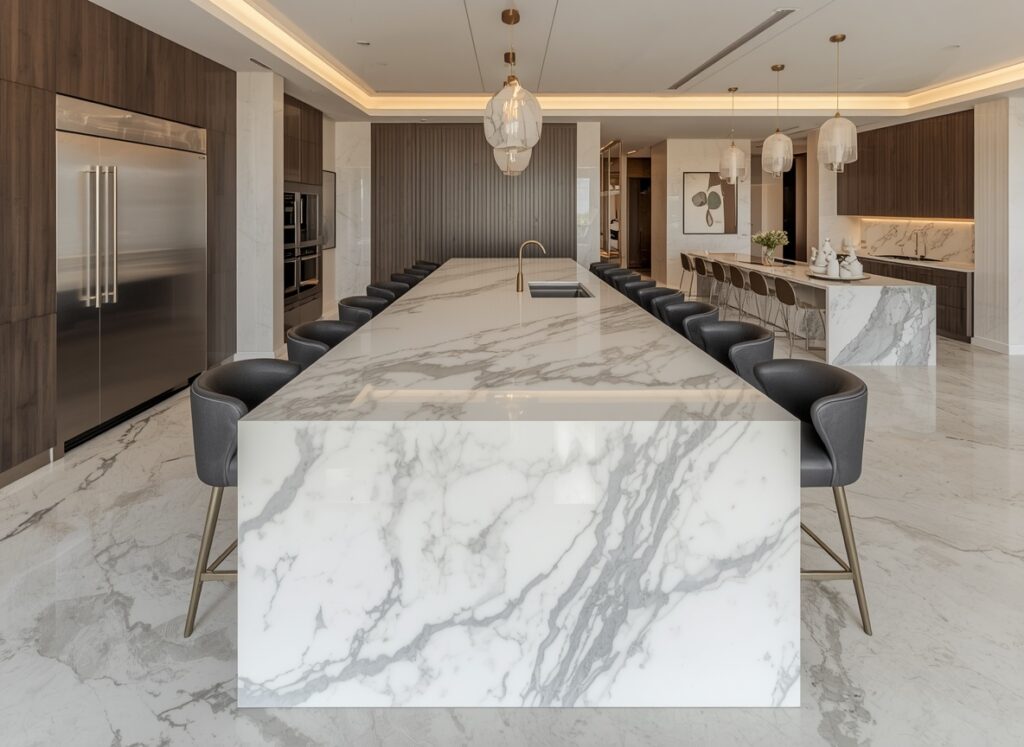
What is a Dolomite Countertop Surface?
When looking closely at what a dolomite countertop is, a dolomite countertop surface is a solid slab of natural stone cut directly from the earth. Think of it as a marble’s tougher, more affordable sibling. It gives you the same high-end look—with beautiful gray and white veining—but its unique mineral mix makes it slightly harder and more scratch-resistant than traditional marble.
Here is the quick breakdown:
- The Look: Smooth, elegant, and looks identical to luxury marble.
- The Strength: Easily handles heat and resists everyday scratches or chips better than marble.
- The Catch: It is still a natural stone. It needs to be sealed once a year, and acidic spills (like lemon juice or vinegar) will dull the surface if not wiped up immediately.
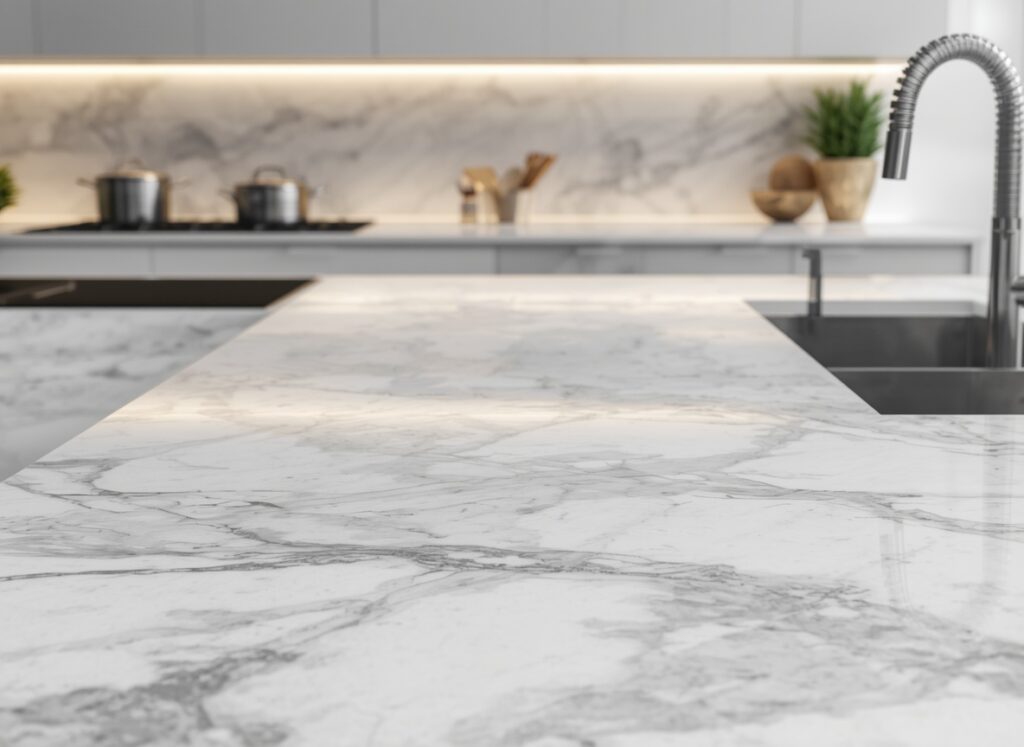
Dolomite vs Granite Comparison Table:
| General look | Marble-like veining (slab dependent) | Speckled/granular natural look |
| Scratch resistance | Medium (can scratch under hard use) | High (very scratch resistant) |
| Acid/etch risk | Moderate risk (can dull/etch if left) | Lower risk vs carbonate stones |
| Stain risk | Medium (sealing helps a lot) | Usually lower than dolomite (still sealed) |
| Porosity | Often lower-medium (varies by slab) | Often lower than many softer stones |
| Heat tolerance | Good (use trivets) | Very good / best-in-class for heat |
| Chipping/edge durability | Often better than marble | Often very strong for edges/chipping |
| Maintenance level | Moderate: sealing + safe cleaners | Moderate: sealing + normal stone-safe care |
| Best for | Marble-look with controlled maintenance | Busy kitchens where durability matters most |
Dolomite vs Marble Comparison Table:
| General look | Marble-like veining/appearance | Classic luxury veining (slab dependent) |
| Scratch resistance | Medium (can scratch with cutting/grit) | Lower (easier to mark) |
| Acid/etch risk | Moderate risk (can dull/etch if left) | Higher risk (etch more easily) |
| Stain risk | Medium (depends on sealing) | Often higher if not sealed well |
| Porosity | Often lower than marble | Often more porous (varies by slab) |
| Edge durability | Often better than marble | Edges can chip more easily |
| Maintenance level | Moderate: sealing + fast spill cleanup | Higher: sealing + more careful cleaning |
| Heat tolerance | Good for normal use (use trivets) | Good, but protect from thermal stress |
| Best for | People who want a marble-like look | People who want traditional marble look |
Dolomite Countertops: Pros and Cons
Pros:
- Luxury marble-like appearance: Premium look with elegant natural veining.
- Great for design continuity: Works well in kitchens and bathrooms for matching tones and finishes.
- Heat-friendly for daily use: Handles normal hot-item moments better than many man-made surfaces.
- Good everyday practicality (with care): If sealed and maintained, it performs well for most family use.
- Elegant finishes available: Polished for shine, honed for matte, textured for grip.
Cons:
- Not fully acid-proof: Lemon, vinegar, and strong acidic cleaners can dull or etch over time.
- Can scratch: Avoid cutting directly on the stone; use boards.
- Sealing is important: Without sealing and correct maintenance, the risk increases.
- Natural stone behavior: Slabs vary—always pick and approve your actual slab before final fabrication.
10 Practical Ideas on How to Use Dolomite Countertops:
1. Main Kitchen Countertops Workspace:
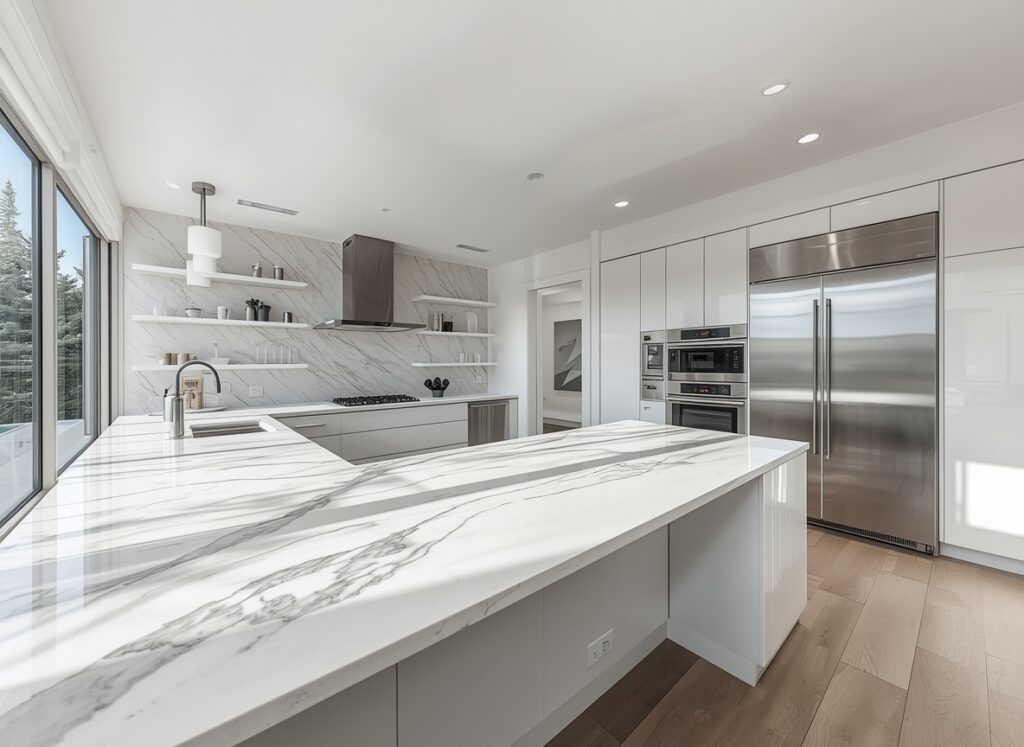
Installing dolomite kitchen counters gives you a bright, strong workspace that easily handles heavy pots and cooking. It has quickly become one of the top premium kitchen countertop choices today. The light colors make small kitchens look bigger by reflecting natural light. Its smooth, polished surface is very easy to clean because food does not stick to it.
2. Statement Kitchen Islands Centerpiece:
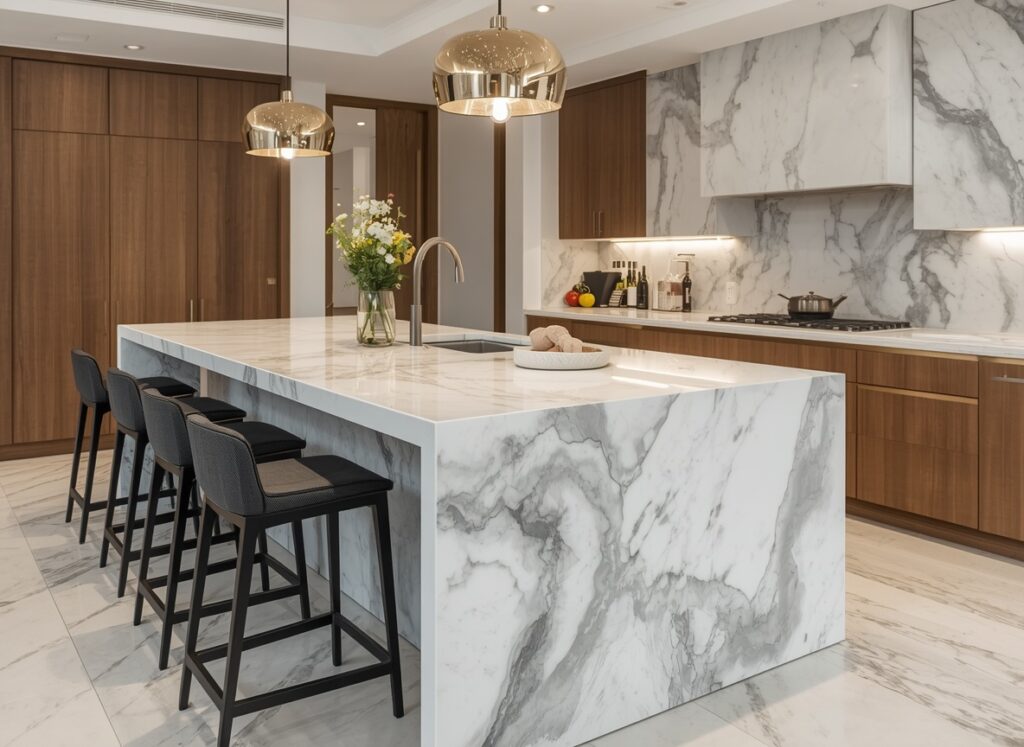
Using one big piece of dolomite on your kitchen island creates a beautiful center feature without ugly lines. This tough stone easily handles busy family use, from quick breakfasts to hosting guests. You can ask your worker for a thick edge to make it look even more luxurious.
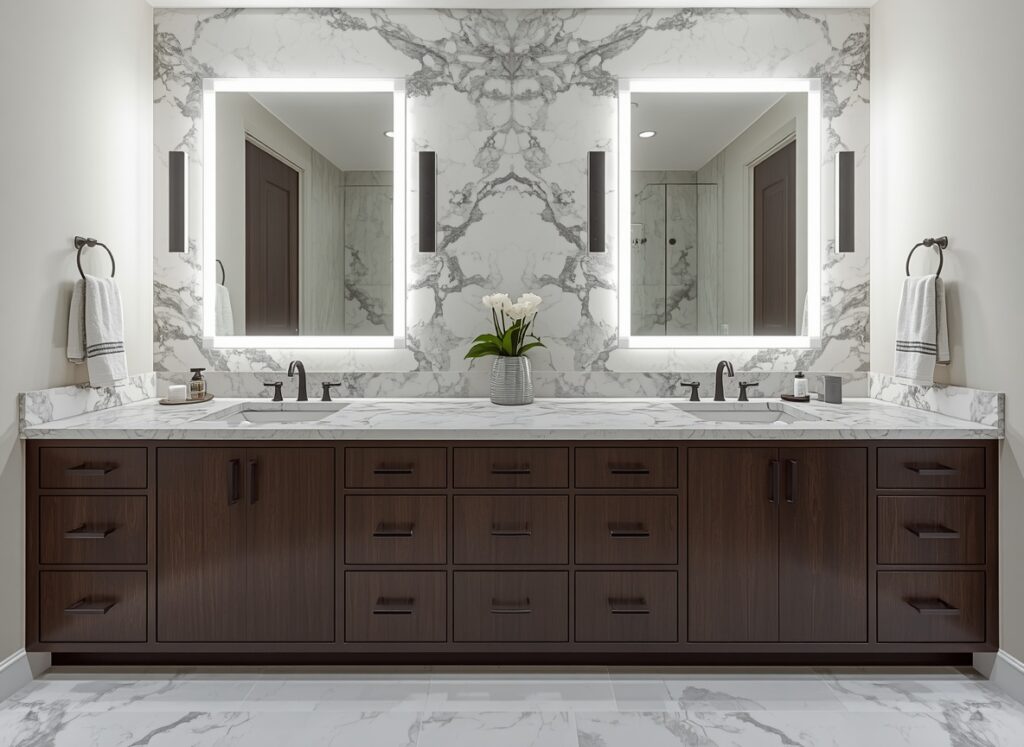
3. Bathroom Vanity Countertops Oasis:
Dolomite adds a beautiful, relaxing feel when you bring natural materials into bath spaces. It creates a stunning bathroom vanity top that safely handles hot hair tools like curling irons without cracking or losing its shine. Since bathrooms do not have sour kitchen liquids like lemon juice, the stone stays shiny much longer.
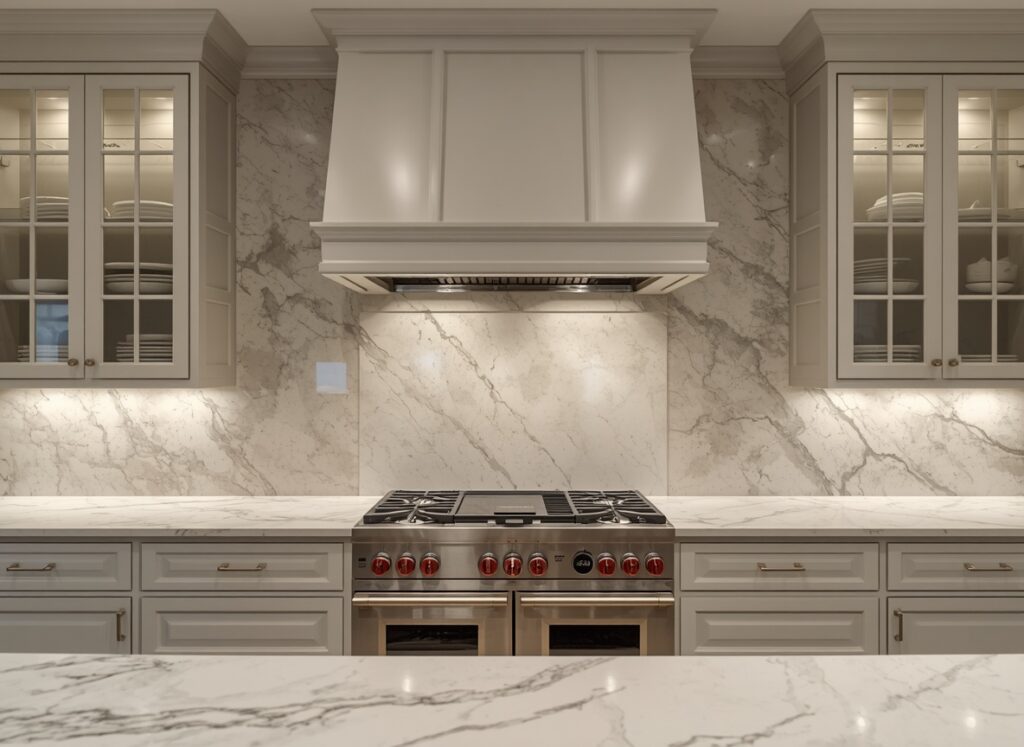
4. Matching Full Height Backsplashes:
Running the stone slab straight up the wall creates a modern look with no tile lines. If you are looking for unique backsplash ideas, this seamless design means there is no grout to trap dirty kitchen grease or mold behind your stove. You can easily clean off cooking splashes with just warm water and mild soap.
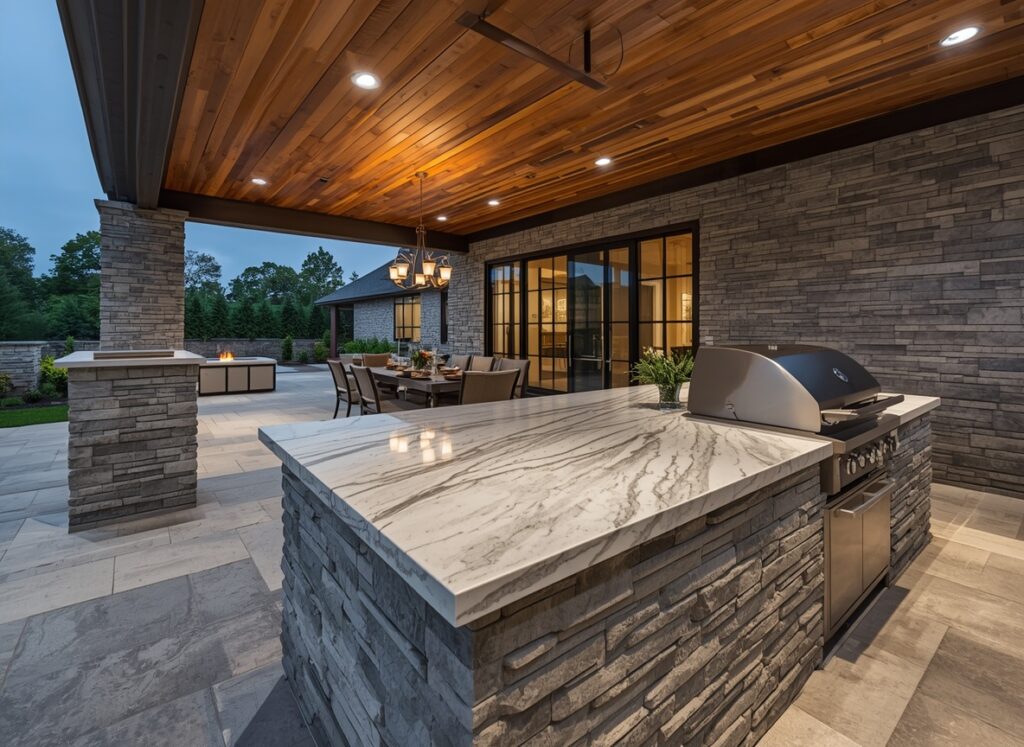
5. Outdoor Kitchen and BBQ Counters:
Dolomite is perfect for outdoor kitchens and patio BBQ areas because it handles high grill heat much better than man-made quartz, which can warp or fade. Its strong, scratch-resistant surface is great for food prep and easily withstands outdoor weather, giving your backyard a premium luxury look.
6. Luxury Floating TV Console Tops:
Using a dolomite countertop on a floating TV cabinet adds a beautiful modern look to your living room. This tough stone gives you a perfectly flat, scratch-resistant surface that easily holds heavy TVs and sound systems without bending or sagging over time like cheap wood or plastic.

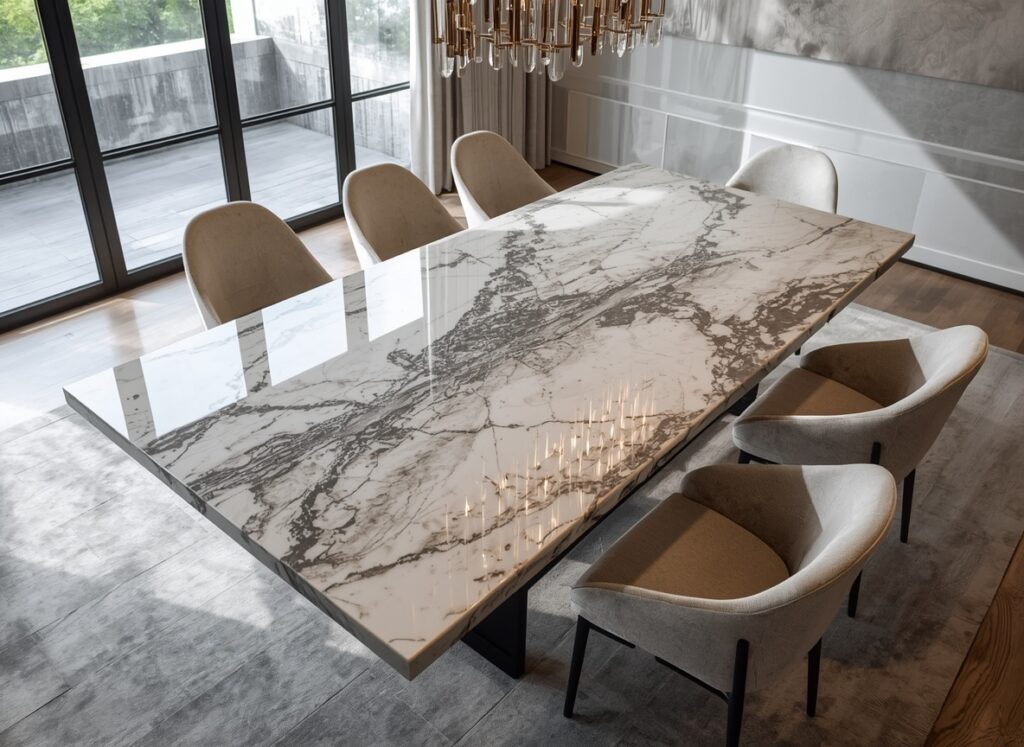
7. Custom Dining Table Tops:
A custom dolomite tabletop gives you a unique piece of furniture that serves as an excellent, durable marble alternative. It has beautiful natural patterns, meaning no one else will have a table exactly like yours. A simple coat of sealer protects the surface from messy wine or coffee spills.
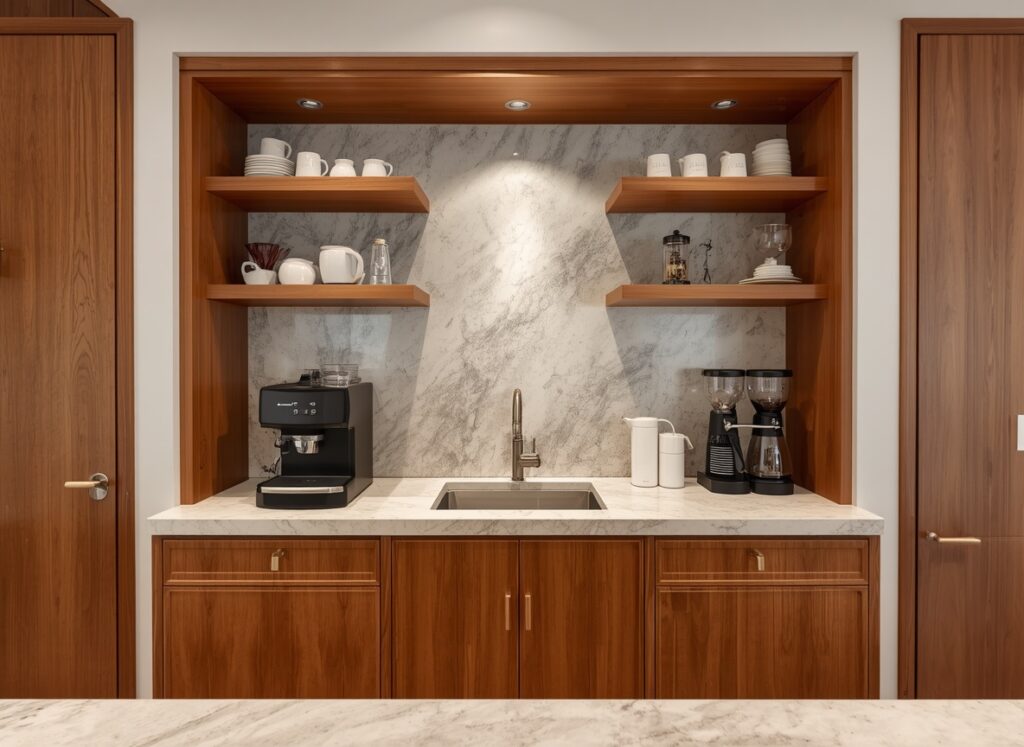
8. Elegant Home Coffee Stations:
A special dolomite coffee corner keeps your espresso machine and mugs neat and organized. The stone easily takes the heat from hot coffee machines without hurting the wooden cabinets underneath. It is dense, so you have plenty of time to wipe up coffee drips before they stain.
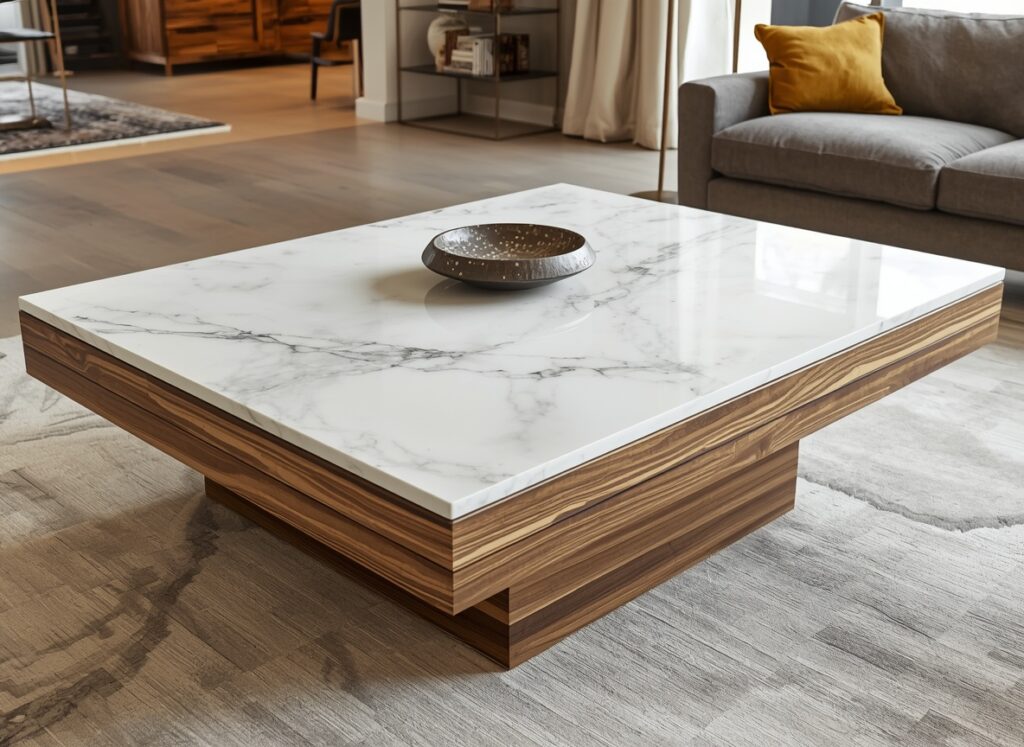
9. Living Room Coffee Table Tops:
Dolomite is excellent for a central coffee table when placed over a solid, fully packed wooden frame. This full under-support completely encloses the stone and protects its corners from chipping or breaking. It easily handles hot coffee mugs and heavy trays, giving you a highly durable and premium centerpiece.
10. Executive Office Desks:
A smooth dolomite desk instantly elevates your office with a premium, professional look. Unlike standard wood or plastic countertops, this durable natural stone won’t scratch from laptops or sag under heavy monitors. Its elegant texture fits perfectly into any sleek theme, effortlessly tying the rest of your office decor and interiors together.

Essential Care Guide for Dolomite Countertops
To maintain the pristine beauty and finish of your natural stone, please follow these professional care standards for maintaining natural stone surfaces:
1. Immediate Spill Cleanup:
Act immediately. Wipe up spills the moment they happen with a soft cloth.
- High-Risk Liquids: Coffee, wine, lemon juice, and other acidic substances must be cleaned right away to prevent permanent etching (dulling) and staining.
2. Proper Cleaning Technique:
- The Routine: Use warm water paired with a pH-neutral stone cleaner designed specifically for natural surfaces.
- The Tool: Always use a soft microfiber cloth or a non-abrasive sponge. Clean using gentle, circular motions.
3. What to Strictly Avoid:
Warning: Using the wrong products can strip your stone’s protective sealer and damage the surface.
- No Acidic Cleaners: Never use vinegar, glass cleaners, or lemon-based products.
- No Harsh Chemicals: Avoid aggressive chemicals like Windex, ammonia, and bleach.
- No Abrasive Scrubbers: Heavy-duty scouring pads or steel wool will scratch and permanently dull the polished finish.
Helpful Professional Summary Conclusion:
The main purpose of this guide is to clear the confusion around natural stone and help you confidently choose the right surface for your home. Using my decade of design experience, I have broken down exactly what a dolomite countertop is in simple words, comparing it directly with marble and granite so you can see the real differences in durability and look. By sharing 10 practical and unique design ideas—from stunning kitchen islands to spa-like shower walls—along with straightforward care tips, this post gives you all the complete, honest information you need to use this luxury, budget-friendly stone across your space with absolute confidence.
Frequently Asked Questions with Answers:
Q1: What is dolomite made of?
Dolomite is a natural sedimentary stone mainly made of calcium magnesium carbonate, often written as CaMg(CO_3)_2.
Q2: Is dolomite a good choice for a busy kitchen?
Yes, it is an excellent choice. Many people who wonder what dolomite countertops are are surprised to learn it handles daily kitchen heat and resist chipping far better than marble. However, because it can scratch under heavy pressure, you should always use cutting boards rather than slicing food directly on the stone.
Q3: Do dolomite countertops stain easily?
No, they do not stain easily because they are less porous than marble. However, they are not completely impervious. If dark liquids like red wine, coffee, or oil are left on the surface for hours, they can leave a mark. Keeping the surface sealed prevents this completely.
Q4: How should I clean my dolomite countertops daily?
Avoid harsh chemical cleaners, window sprays, bleach, or anything containing lemon or vinegar. Instead, clean the surface using warm water, a few drops of mild dish soap, or a pH-neutral stone cleaner, and a soft microfiber cloth.
Q5: How often do I need to seal a dolomite countertop?
Professionally, I recommend sealing your dolomite countertops once every 12 months. If the kitchen sees heavy daily use, sealing it twice a year takes only a few minutes and provides an absolute shield against stains and etching.

Muhammad Imran is a professional content writer and home interior designer with over 10 years of high experience. He holds a Master’s Degree and has deep expertise in home improvement, home decor, kitchen design, and bathroom remodeling. Through Master Home Decor, he works as a content writer to share his real-world experience and simple, high-quality ideas to help readers create their dream homes.